
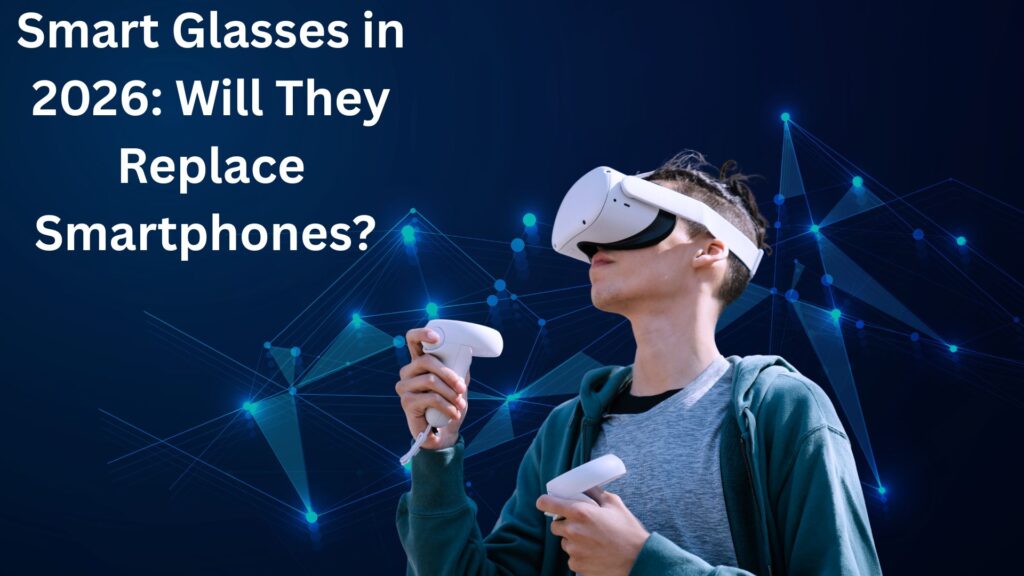
To me, technology goes beyond innovation; it shapes how we interact, work, and experience the digital world.
Overview
Technology has reached a time where wearable technology is mixing real and digital life more smoothly than ever. One of the most exciting new inventions in 2026 is smart glasses — devices designed to combine comfort, connection, and AR features into a single sleek accessory.
But as these futuristic glasses become smarter and more capable,many people now wonder : Will they eventually replace smartphones?
In this article, we’ll explore how far smart glasses have come, what features make them powerful, and whether they can really replace of the modern smartphone.
The Evolution of Smart Glasses
Smart glasses have appeared as test versions for over a decade. Early models, like Google Glass (2013), were too advanced for that time but had weak battery, low display quality, and privacy issues.
By 2026, the story is very different. Major companies like Apple, Meta, Samsung, and Huawei have launched smart glasses that look stylish,feel light and offer great features — from calling without holding a phone and 3D maps.
👉 These devices no longer feel like “tech toys.” They’ve become common wearable devices used by workers, travelers, and students.
What Makes 2026 Smart Glasses So Advanced?
Modern smart glasses have evolved into complete mini computers. Here’s what makes the 2026 versions shine :
1. Seamless Augmented Reality (AR) Integration
2026 smart glasses show digital info right in front of your eyes — directions, notifications,instant translations , or even health data.
You can see restaurant ratings while walking, or get on-screen cues during meetings — all without touching your phone.
2. Voice and Gesture Controls
Instead of typing or swiping, users can now speak commands or use hand gestures to perform actions.
For example:
- Say “Take a picture” and the glasses capture an image instantly.
- Move your finger slightly, and you can scroll through messages or change settings.
This use without touching makes smart glasses not just convenient, but also modern .
3. AI-Powered Personal Assistance
Integrated AI assistants (like Siri, Google Assistant, or Meta’s voice bots) make these glasses smart enough to understand surroundings.
They recognize your surroundings,guess what you may need , and give quick helpful tips — such as translating a menu or suggesting the quickest route home.
Comparing Smart Glasses vs. Smartphones
The question “Will smart glasses replace smartphones?”comes down to a few main differences :
| Feature | Smart Glasses (2026) | Smartphones (2025-26) |
|---|---|---|
| Display | shows info through AR | Touchscreen |
| Interaction | Voice & gestures | uses touch |
| Ease of carrying | Worn on face | Carried in pocket |
| Privacy | may worry some people | More private |
| Battery Life | Shorter (4–6 hrs avg) | Longer (up to 24 hrs) |
| Camera | always available | Manual access |
| Price | Higher for high-end models | Many price options |
👉 Smart glasses offer smart comfort, but smartphones still win in battery, privacy, and making videos or photos.
The Benefits of Smart Glasses
1. Real Hands-Free Comfort
No need to pull out your phone for directions, calls, or messages —everything shows up right in front of you .
2. Instant Information Access
Instant translations, voice-to-text notes, and quick search results make work and travel easier .
3. Health and Safety Applications
Many models now check tiredness, eye stress, or surroundings, warning users before any potential health issues arise.
4. Engaging AR Experiences
Whether gaming or exploring, AR overlays make the physical world more interactive —making simple things more fun and easy .
The Challenges Smart Glasses Still Face
Despite fast growth, some problems still exist before smart glasses can completely replace smartphones:
- Battery Limitations: Using AR and AI all the time uses a lot of battery.
- Privacy Issues: Cameras on glasses make some people worry about privacy.
- Not many apps available yet: Smartphones still have millions of apps made for phone screens.
- Public comfort: Wearing tech on your face still makes people stare— not everyone is comfortable with that.
👉 These challenges mean that while smart glasses can complement phones,they might take some years to fully replace phones .
Will Smart Glasses Replace Smartphones by 2026?
Honestly, not completely— at least not by 2026.
However,the direction is clear : as AR and AI in wearables gets smarter, we’ll use screens less often and more on voice and visual interfaces.
Many many experts believe that by 2030, smart glasses could become the primary device for communication and AR-based experiences, while smartphones will serve as extra devices for bigger jobs.
Brands Leading the Smart Glasses Revolution
- Apple Vision Pro Lite (2026) – Small, strong, and fits well with Apple products.
- Meta Ray-Ban AR Gen 3 – Mixes style with AR sharing.
- Samsung Neo Glass –Good for quick multitasking and Android phones .
- Google Project Iris –Made for work use, with AR tools for business .
These products show that the market is not just experimental anymore — it’s busy and growing fast.
Closing Notes
Smart glasses are no longer future ideas— they’re becoming part of daily life. While they may not fully replace phones in 2026, they’re already changing how we connect, work, and see and enjoy the world.
As technology continues to evolve,the difference between phones and wearables will keep getting smaller — bringing us closer to a future where everything works without using hands.
Enjoyed this article? You might also find my previous post helpful: [https://techhorizonpro.com/top-wearable-gadgets-2026-health-vision-ar-innovations/ ]
Authored by Muhammad Zeeshan, sharing honest, practical insights on technology, innovation, and the digital world.
If this guide helped you, explore another related article for more useful tech knowledge.


Pingback: 6G Networks in 2026: How They’ll Transform Global Connectivity