
In my view, technology is more than innovation — it’s about how it connects, simplifies, and transforms our everyday lives. I believe every invention carries a story of progress and purpose, and that’s exactly what I enjoy exploring through my writing.
Overview
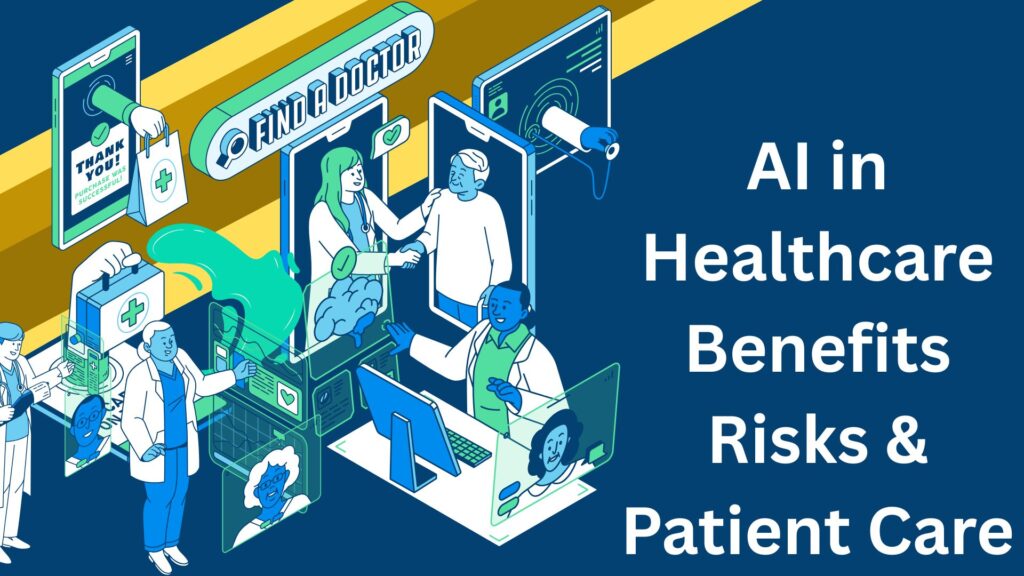
Artificial Intelligence (AI) is no longer just a future idea in healthcare. Today, it is already being used in hospitals, clinics, laboratories, and even inside our homes through health apps and smart devices. From helping doctors find diseases early to speeding up test results and improving treatment plans, AI in healthcare is slowly changing how patients receive care.
But AI is not perfect. Along with real benefits, there are hidden risks, ethical concerns, and real-world limits that doctors, patients, and healthcare systems must understand. This guide explains how AI is changing patient care, where it truly helps, where it can cause problems, and what people should realistically expect from it.
What Does AI in Healthcare Actually Mean?
AI in healthcare means using computer systems that can study medical data, find patterns, and help doctors make better decisions. These systems learn from large amounts of data such as medical images, patient records, lab test results, and medical research.
Unlike traditional software that follows fixed rules, AI systems improve over time. The more data they see, the better they become. This makes AI very useful in busy medical settings where quick and accurate decisions can save lives.
Common Forms of AI Used in Healthcare
- Machine learning to predict diseases
- Image-reading AI for X-rays and scans
- Language-reading tools for medical records
- AI chatbots for basic patient help
- Risk prediction tools for hospitals
These tools are designed to support doctors, not replace them.
Real Benefits of AI in Healthcare
When used properly, AI offers clear and real benefits. Below are the most important ways AI is already improving patient care around the world.
1. Faster and More Accurate Diagnosis
One of the best uses of AI in healthcare is medical diagnosis. AI systems can study X-rays, MRIs, CT scans, and lab test images much faster than humans. In many cases, they can spot early signs of disease that may be missed during human checking.
Real example:
In radiology, AI tools help doctors find early signs of breast cancer or small lung problems before symptoms appear.
Why this matters:
- Early diagnosis improves treatment results
- Doctors save time
- Helpful in areas with fewer medical specialists
AI does not replace doctors, but it acts like a second pair of eyes.
2. Personalized Treatment Plans
Every patient is different. AI helps doctors move away from “same treatment for everyone” thinking.
AI can study a patient’s past medical history, genes, lifestyle habits, and response to earlier treatments. Based on this information, it suggests custom treatment plans that fit each patient better.
Example:
In cancer care, AI helps doctors choose treatments based on tumor details and patient data instead of using general treatment rules.
This leads to:
- Better treatment results
- Fewer side effects
- More confidence for patients
3. Improved Patient Monitoring and Remote Care
Wearable devices like smartwatches and health apps now track heart rate, oxygen levels, sleep patterns, and physical activity. AI constantly checks this data and notices unusual changes.
If something looks wrong, AI can alert doctors or patients early.
Benefits include:
- Fewer hospital visits
- Better long-term illness care
- Faster emergency response
This is especially helpful for elderly patients and people with heart disease or diabetes.
4. Reduced Office Work for Doctors
Doctors often spend more time on paperwork than with patients. AI helps reduce this problem by doing tasks automatically, such as:
- Updating digital patient records
- Scheduling appointments
- Handling billing and coding
- Summarizing patient notes
This allows doctors to focus more on patient care instead of screens and forms.
Practical AI Tools Used in Healthcare Today
Below is a table showing real AI tools already used in healthcare.
| AI Tool | Purpose | Real-World Impact |
|---|---|---|
| Medical Imaging AI | Find diseases in scans | Faster early diagnosis |
| AI Health Chatbots | Answer basic patient questions | 24/7 patient help |
| Risk Prediction AI | Predict health risks | Preventive care |
| Virtual Nurses | Send follow-up reminders | Patients follow treatment better |
| AI Drug Discovery | Find new medicines | Faster medical research |
These tools assist doctors—they do not replace human judgment.
How AI Is Changing the Patient Care Experience
From a patient’s point of view, AI is improving healthcare in quiet but powerful ways.
Shorter Waiting Times
AI improves appointment planning and patient flow, helping reduce long waiting lines in hospitals.
Better Access to Care
People living in areas with fewer doctors can use AI tools for basic medical guidance without long travel.
Clearer Medical Decisions
AI-based suggestions help doctors explain conditions and treatment choices in a simpler way.
Hidden Risks and Limits of AI in Healthcare
Despite its benefits, AI in healthcare also has serious risks that should not be ignored.
1. Data Privacy and Security Risks
AI systems need large amounts of private patient information. If this data is not protected properly, it can be stolen or used wrongly.
Main risk:
Healthcare data leaks can lead to identity theft and loss of trust.
Strong data protection laws and security systems are essential.
2. Bias in AI Systems
AI learns from past data. If that data is unfair or incomplete, AI results can also be unfair.
Example:
If AI is trained mostly on data from one population group, it may not work well for others.
This can lead to:
- Wrong diagnoses
- Unfair treatment suggestions
Doctors must be aware of this risk.
3. Over-Reliance on AI Decisions
AI should help doctors, not replace them. Blindly trusting AI without doctor checking can be dangerous.
Doctors must always:
- Review AI results
- Use clinical experience
- Make the final decision
AI is a tool, not a decision-maker.
4. Lack of Transparency
Some AI systems are hard to understand. They give results but do not clearly explain how they reached them.
This is risky in healthcare, where responsibility and clear reasoning are critical.
AI vs Human Doctors: A Practical Comparison
AI and doctors have very different strengths.
| Aspect | AI Systems | Human Doctors |
|---|---|---|
| Speed | Very fast | Slower but careful |
| Emotional understanding | None | High |
| Spotting patterns | Very strong | Experience-based |
| Ethical judgment | Limited | Strong |
| Final responsibility | Cannot take responsibility | Fully responsible |
The best results come when AI and doctors work together.
When AI Helps Most — And When to Be Careful
AI Is Most Helpful When:
- Large data needs analysis
- Early disease detection is important
- Repetitive tasks can be automated
- Doctors need decision support
AI Should Be Used Carefully When:
- Patient data is limited or biased
- Ethical choices are involved
- Life-and-death decisions are required
The Future of AI in Healthcare
AI will continue to grow, but success depends on careful use. Future focus areas include:
- AI systems that explain their decisions
- Stronger data protection laws
- Better fit into daily hospital work
- More teamwork between doctors and tech experts
AI will become a trusted assistant, not a replacement.
Final Thoughts
AI in healthcare offers real benefits such as faster diagnosis, custom treatment, and better patient monitoring. At the same time, it brings risks related to privacy, bias, and over-dependence on technology.
The key is balance. When used carefully, AI can greatly improve patient care. When misunderstood or misused, it can create new problems.
Doctors, healthcare systems, and patients must work together to ensure AI remains a helpful support tool—not a blind authority.
If this article was useful, feel free to check out my previous post here: [https://techhorizonpro.com/ai-resume-builders-smart-job-application-tools/]
Written by Muhammad Zeeshan — a tech enthusiast who loves uncovering how innovation, AI, and digital tools are reshaping our world. He writes to make technology easy to understand and useful for everyone.
Pingback: Google AI vs OpenAI: Leading the AI Revolution in 2026 Explained | Tech Horizon Pro