
To me, technology goes beyond innovation; it shapes how we interact, work, and experience the digital world.
Getting Started
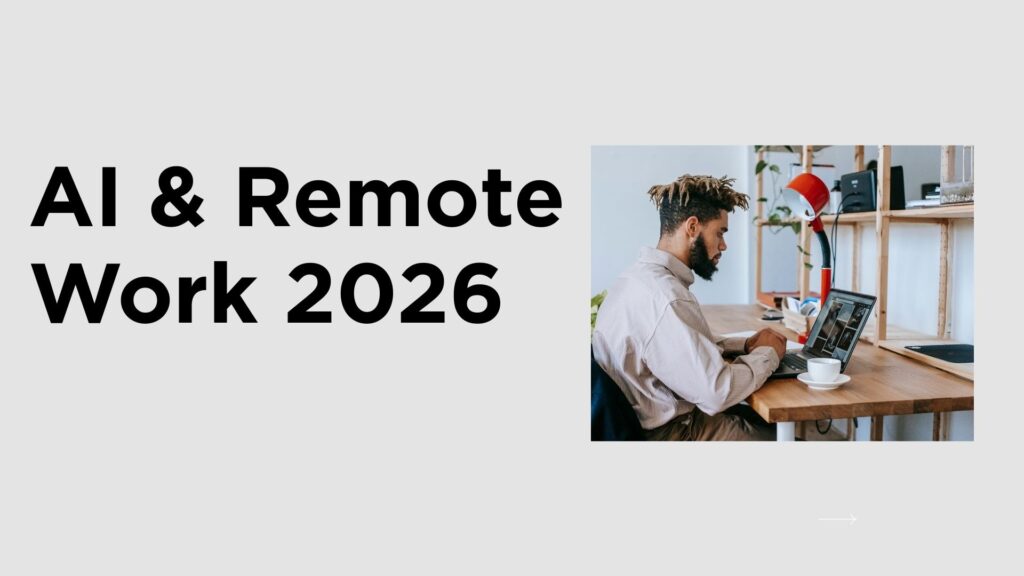
A few months ago, I spoke with a remote project manager who works from a small room in his home. He shared something simple but eye-opening. He no longer starts his day by opening email. Instead, he checks an AI dashboard that shows his most important tasks, points out possible problems, and helps him plan his meetings. That small habit saves him almost an hour every day.
This story may sound ordinary, but it reflects a bigger change. AI and remote work in 2026 are no longer ideas for the future. They are part of everyday professional life. People are not using AI to replace work — they are using it to work more clearly, with less stress and better focus.
This guide explains the most useful and practical trends, without hype or big promises.
How AI Is Quietly Changing Remote Work
Remote work didn’t suddenly become smarter. The real change is how naturally AI now fits into daily work routines. Many tools work quietly in the background instead of demanding constant attention.
For most professionals, this means less time spent on repeat tasks, fewer forgotten details, and clearer priorities. The biggest shift is not automation alone. It is getting help with making decisions.
In 2026, AI and remote work connect through systems that notice habits, learn preferences, and slowly adjust to how each person works. Over time, these tools feel less like software and more like helpful assistants.
Smarter Task and Time Management
One of the strongest trends in AI and remote work in 2026 is smart task planning.
How It Works in Real Life
Modern AI tools can:
- Look at deadlines and workload
- Warn about delays early
- Reorder tasks based on importance and focus level
Real example: A freelance designer working with international clients uses an AI planner that schedules focused work during quiet hours and meetings when time zones overlap. The plan updates daily based on real progress, not guesses.
This approach is not about doing more work. It’s about understanding your time better.
AI-Powered Communication for Remote Teams
Communication has always been one of the hardest parts of remote work. AI is finally making it smoother.
What Professionals Notice Most
- Meetings are summarized automatically with clear next steps
- Short reply suggestions help keep the same writing style
- Global teams can talk more easily through live translation
| Communication Task | Without AI | With AI Support |
|---|---|---|
| Meeting notes | Often forgotten | Instant summaries |
| Follow-ups | Easy to miss | Automatic reminders |
| Global teamwork | Language issues | Live translation |
These changes reduce confusion, which is one of the biggest hidden problems in remote work.
Personalized Workflows Instead of “Same for Everyone”
Another major shift in AI and remote work in 2026 is personalization.
Traditional productivity advice assumes everyone works the same way. AI tools now adjust based on real behavior.
Examples of Personal Support
- Developers get focus time when their code quality is best
- Writers receive suggestions when attention goes down
- Managers see early signs when team pressure rises
While testing AI writing tools, I noticed something interesting. When I work late evenings, suggestions become simpler and shorter. It feels less like a machine and more like quiet support paying attention.
Hiring and Talent Evaluation in a Remote-First World
AI has changed how companies hire remote professionals — and how professionals show their value.
What’s Different in 2026
- Skill tests matter more than long resumes
- AI reviews real work samples
- Interviews focus on handling real tasks
| Hiring Area | Old Model | AI-Enhanced Model |
|---|---|---|
| Resume review | Keyword matching | Skill pattern review |
| Interviews | General questions | Real task simulations |
| Candidate fit | Gut feeling | Data-backed decisions |
For professionals, this means real ability matters more than job titles.
AI as Support, Not a Replacement
Many people still worry that AI will replace remote jobs. In reality, the situation is more realistic.
In AI and remote work in 2026, the most successful professionals use AI as support.
Roles Seeing the Most Benefit
- Project coordinators
- Analysts
- Content creators
- Customer support teams
AI handles routine work. Humans handle decisions, creativity, and relationships.
Privacy and Trust Are Now Important
As AI becomes more common, responsibility matters more.
Remote professionals now pay attention to:
- Where their data is stored
- How AI tools learn from use
- What information is shared automatically
Companies are responding with clearer rules and limited permissions. Trust has become an important consideration when choosing tools.
Choosing the Right AI Tools
Not every AI tool is useful. The best ones fit naturally into your routine.
Simple Decision Guide
| Factor | Why It Matters |
|---|---|
| Works with other apps | Saves switching time |
| Clear rules | Builds trust |
| Easy to learn | Saves time fast |
| Adjustable | Fits your style |
A simple rule: if a tool takes more time to set up than it saves, skip it.
Skills Professionals Need to Stay Relevant
Technical skills alone are not enough.
In AI and remote work in 2026, successful professionals share three habits:
- Comfort using AI suggestions
- Ability to check and improve AI output
- Clear thinking and communication
AI helps people who work with it — not those who ignore it.
Where AI and Remote Work Are Heading
The next phase will be quiet. Instead of many new tools, existing ones will connect better.
Calendars, task lists, communication apps, and tracking tools will feel more connected. AI will handle the links in the background.
Workdays will feel calmer. Fewer decisions. Clearer focus.
A Simple Way to Think About the Future
AI and remote work in 2026 are not about replacing people or chasing trends. They are about removing unnecessary effort.
When used well, AI gives professionals a clear head. Less time organizing work. More time actually doing it — and sometimes even finishing early enough to step away from the screen.
That quiet improvement is what really makes this shift worth noticing.
If you enjoyed this article, you may also like my previous post: [https://techhorizonpro.com/edge-computing-vs-cloud-computing/]
Authored by Muhammad Zeeshan, sharing honest, practical insights on technology, innovation, and the digital world.
If this guide helped you, explore another article for more useful tech knowledge.

Pingback: AI in Customer Support: Real-World Examples and Practical Use Cases | Tech Horizon Pro