
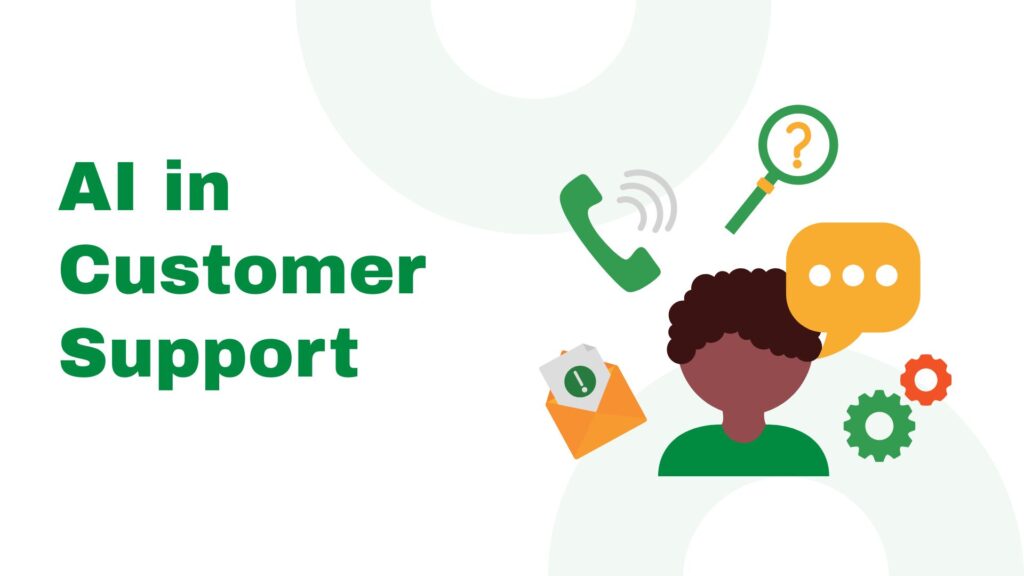
To me, technology goes beyond innovation; it shapes how we interact, work, and experience the digital world.
Topic Overview
Last month, I contacted an online store because my order had been stuck in “processing” for five days. I expected the usual experience: waiting too long, receiving simple copy-paste answers, and feeling annoyed. Instead, something different happened.
The chat assistant quickly understood my problem, showed my order status, gave me a realistic delivery update, and connected me to a real support person when I asked another question. The whole conversation took less than five minutes.
That experience is a clear and useful example of AI in customer support done the right way.
This article is not about big promises or future fantasies. It explains how AI is actually being used in customer support today, where it helps, where it falls short, and how businesses can use it responsibly without hurting customer trust.
What AI in Customer Support Really Means
When people hear “AI in customer support,” they often think of systems that work completely on their own and replace humans. That is not what most businesses are doing — and honestly, it shouldn’t be.
In real life, AI in customer support means using tools that help, improve, or handle part of the support work, such as:
- Answering common questions
- Sorting and sending support tickets
- Understanding customer mood
- Helping human agents reply faster
The main goal is not to remove people. The goal is to make things smoother for customers and reduce stress for support teams.
Why Businesses Are Adopting AI for Customer Support
Customers now expect more than before. They want fast replies, clear answers, and support at any time of day.
Businesses are turning to AI because:
- Support requests keep increasing
- Customers expect help 24/7
- Support staff get tired of answering the same questions
- Companies need systems that can grow with demand
AI helps manage this pressure, but only when it is used in the right way and not forced everywhere.
Core Areas Where AI in Customer Support Is Used
Automated Chat and Messaging
AI chat systems are commonly used on websites, apps, and messaging platforms.
They usually handle simple and repeated questions like:
- “Where is my order?”
- Password reset help
- Return and refund rules
- Booking or rescheduling appointments
These systems work best when questions are common and easy to predict.
Real example:
Many online stores use AI chat assistants to answer order tracking questions by getting information straight from delivery systems. This alone can cut support tickets by 30–40%.
Intelligent Ticket Sorting and Sending
One of the most helpful but less visible uses of AI in customer support is sorting and sending tickets.
AI looks at things like:
- What the customer wants
- How urgent the message is
- Past conversations
Then it sends the request to the right team or person.
This matters because customers don’t care about internal teams. They just want their problem fixed quickly. AI reduces wasted time inside the company.
Agent Assistance (Helping, Not Replacing)
This is where AI often makes the biggest difference.
AI tools can help support agents by:
- Suggesting reply drafts
- Finding helpful help-center articles
- Summarizing long chat histories
- Showing customer mood (angry, confused, calm)
The human agent stays in control, but they work faster and with better information.
From personal experience, agents using AI tools sound calmer and more confident — probably because they are not rushing to find answers.
Practical Tools Used in AI-Powered Customer Support
Here is a simple breakdown of common tools and how they are used:
- Chatbots: Answer FAQs and track orders
- Language understanding tools: Understand customer intent and support different languages
- Emotion detection: Spot frustrated customers and prioritize them
- Agent assist tools: Suggest replies and speed up responses
- Voice AI: Turn calls into text and help call centers
These tools are helpful, but they are not magic. They work well only if the data is accurate and kept up to date.
Real-World Examples of AI in Customer Support
Retail and E-Commerce
Large online stores use AI to:
- Answer delivery questions
- Handle return requests
- Suggest products during support chats
Example:
A clothing brand uses AI to guide customers through size exchanges without human help, which greatly reduces return-related support requests.
Banking and Financial Services
Banks use AI carefully, and that’s a good thing.
Common uses include:
- Balance checks
- Transaction alerts
- Fraud warnings
When issues get complicated, AI quickly passes the customer to a trained human. This mix of AI and people helps customers feel safe and supported.
SaaS and Technology Companies
Software companies rely heavily on AI because:
- Users ask similar setup questions
- Help documents are large
- Support must work worldwide
AI helps users find answers instantly while letting support teams focus on harder problems.
Where AI in Customer Support Struggles
AI is helpful, but it has clear limits.
Emotional Situations
AI struggles with:
- Serious complaints
- Emotional situations
- Conversations that involve negotiation
In these moments, customers want understanding, not speed.
Poor-Quality Training
If AI is trained on old or incomplete information, it can:
- Give wrong answers
- Keep customers stuck in loops
- Damage trust
This is one of the biggest mistakes companies make.
Human + AI: The Best Support Balance
The best support systems today use both AI and humans.
AI is good at:
- Speed
- Handling large numbers
- Repeating tasks
Humans are better at:
- Making decisions
- Showing empathy
- Handling complex cases
Customers respond well to this balance because it feels helpful, not forced.
Decision-Making Help: Is AI Right for You?
Before using AI in customer support, businesses should think carefully.
Volume vs Complexity
- High volume, simple questions → AI helps a lot
- Low volume, complex issues → AI should only assist
Budget and Maintenance
AI is not something you install once and ignore. It needs:
- Regular updates
- Ongoing training
- Performance checks
Low-quality setups often cause more problems later.
Customer Preferences
Some customers like self-service. Others want a real person. Good systems give both options.
Ethics and Transparency
Customers should always know when they are talking to AI.
Good practices include:
- Clearly labeling AI assistants
- Making it easy to reach a human
- Being honest about what AI can’t do
AI should feel helpful, not misleading.
Measuring Success in AI-Driven Support
Success is not about reducing the number of staff.
Better signs include:
- Faster problem resolution
- Higher customer satisfaction
- Less stress for support agents
- Fewer repeat issues
If these improve, AI is doing its job.
Before You Go
Good customer support doesn’t feel automated — it feels understood. When AI in customer support is used carefully, it stays in the background and simply saves time. As a customer, I don’t mind talking to AI as long as it respects my time and knows when to step aside. That balance is what truly defines good support today.
If you enjoyed this article, you may also like my previous post: [https://techhorizonpro.com/ai-and-remote-work-in-2026-practical-trends/]
Authored by Muhammad Zeeshan, sharing honest, practical insights on technology, innovation, and the digital world.
If this guide helped you, explore another article for more useful tech knowledge.

Pingback: Agentic AI Demystified: How It Works, Use Cases, and Why It Matters | Tech Horizon Pro