
In my opinion, technology is more than just innovation — it’s about how it connects, simplifies, and transforms our daily lives. I personally believe every new invention tells a story of progress and purpose, and that’s what I love exploring through my articles.
Getting Started
Technology today isn’t just making our devices better — it’s changing human health itself.
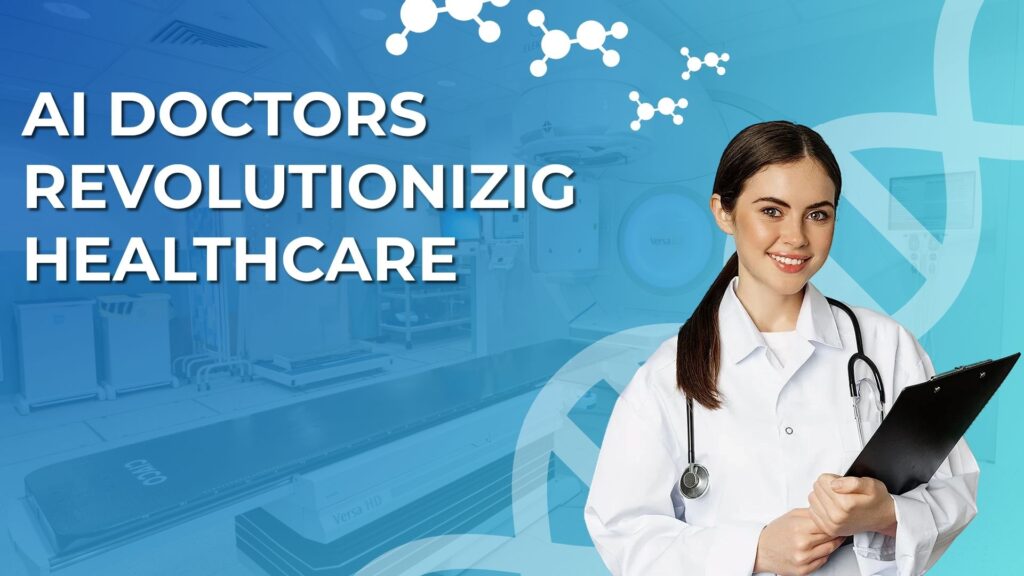
The rise of AI Doctors marks a new era in modern medicine. From finding illnesses early to giving faster and more accurate results, AI is changing how we experience healthcare in 2025.
Unlike old medical tools, these smart systems can study thousands of reports, scans, and records in just seconds. Their goal isn’t to replace real doctors — it’s to support their skills and help give better, faster, and easier healthcare to everyone around the world.
The Digital Transformation of Healthcare
Healthcare has always been based on information — from patient history to lab tests.
Now, smart AI tools are turning that information into useful health insights.
Hospitals and clinics use computer programs that can:
- Find cancer cells earlier than doctors can see
- Predict heart diseases by checking live health data
- Suggest the best treatments based on a patient’s history
This mix of computer accuracy and human care is creating a new kind of medicine — one that’s faster, smarter, and more personal.
How AI Doctors Work
AI doctors don’t wear white coats — but they think fast.
They work through learning programs that have been taught using thousands of medical pictures and reports.
Here’s how they do it:
- Collecting Data
They collect information like blood reports, MRI scans, and genetic details. - Finding Patterns
The system looks for signs that show something might be wrong — such as changes in heartbeat, strange spots in X-rays, or chemical changes in the body. - Diagnosis and Prediction
AI doctors can point out possible health problems before symptoms even start, allowing quick treatment.
👉 Example: Google’s DeepMind AI reached about 94% correct results in finding eye diseases from scans — even better than many specialists.
Accessibility and Global Reach
One of the biggest benefits of AI in healthcare is access for everyone.
In places where there aren’t enough doctors, AI check-up tools act like online doctors.
With only a phone and an internet connection, patients can:
- Scan skin issues
- Track oxygen and heart levels
- Get quick guidance from an AI health assistant
This helps reduce the load on busy hospitals and makes medical advice available even in remote areas.
Human Doctors vs AI Doctors — A New Partnership
AI isn’t here to replace doctors — it’s here to help them do better.
Doctors use AI tools to make faster, data-based decisions, and patients receive more accurate results.
| Aspect | Human Doctor | AI Doctor |
|---|---|---|
| Decision Making | Based on experience | Based on data |
| Emotion & Empathy | ✅ Yes | ❌ No |
| Speed & Efficiency | Moderate | Very fast |
| Accuracy | High (can have small errors) | Almost perfect (after training) |
Together, they form a strong team — mixing human care with computer accuracy.
Real-World Examples of AI in Healthcare
- IBM Watson Health
Helps doctors design custom cancer treatments using AI suggestions. - Babylon Health
A mobile app with an AI chat doctor that gives instant medical help and symptom checking. - Google’s DeepMind & Med-PaLM 2
Improving radiology by finding disease patterns in scans faster than human specialists. - Cardiogram App
Uses smartwatch data to spot uneven heartbeats and early signs of stroke.
These examples show that AI in healthcare isn’t a dream — it’s real, working, and saving lives today.
Privacy, Ethics & Challenges
Even with its big benefits, AI healthcare still faces a few challenges:
- Keeping patient data private and safe
- Avoiding AI mistakes or unfair results
- Following proper medical rules
The future of AI depends on how carefully we balance new ideas with safety and fairness.
That’s why strong AI safety rules and clear systems are needed — to make sure technology stays a tool for good.
The Future of AI Doctors in 2025 and Beyond
By 2025 and beyond, AI systems will be used in almost every part of hospitals — from scans to surgeries.
Here’s what’s coming:
- AI-assisted robotic surgeries
- Health systems that can warn about diseases early
- Voice-based AI doctors for people in far areas
Imagine visiting a clinic where your medical history, lifestyle, and genes are all checked instantly — and within minutes, an AI doctor gives you a custom treatment plan.
That’s the new digital medical era we’re stepping into.
The Human Touch in Digital Medicine
The future of healthcare is people-centered AI.
AI doctors bring speed, accuracy, and support to millions — but human kindness will always stay at the heart of care.
Technology doesn’t remove empathy — it makes it stronger.
And that’s how the next generation of medicine will heal the world — faster, smarter, and more human.
If this article was useful, feel free to check out my previous post here: [https://techhorizonpro.com/ai-agents-2026-autonomous-digital-assistants/ ]
Written by Muhammad Zeeshan — a passionate tech enthusiast who loves exploring how innovation, AI, and digital tools are shaping the modern world.
I write with curiosity and clarity, aiming to make complex technology simple and useful for everyone.
If you enjoyed this post, check out my latest article for more insights on emerging tech trends and future innovations.
Pingback: IoT in Agriculture 2025: How Smart Farms Are Feeding the Future | Tech Horizon Pro
Pingback: IoT in Agriculture 2025: How Smart Farms Are Feeding the Future | Tech Horizon Pro