
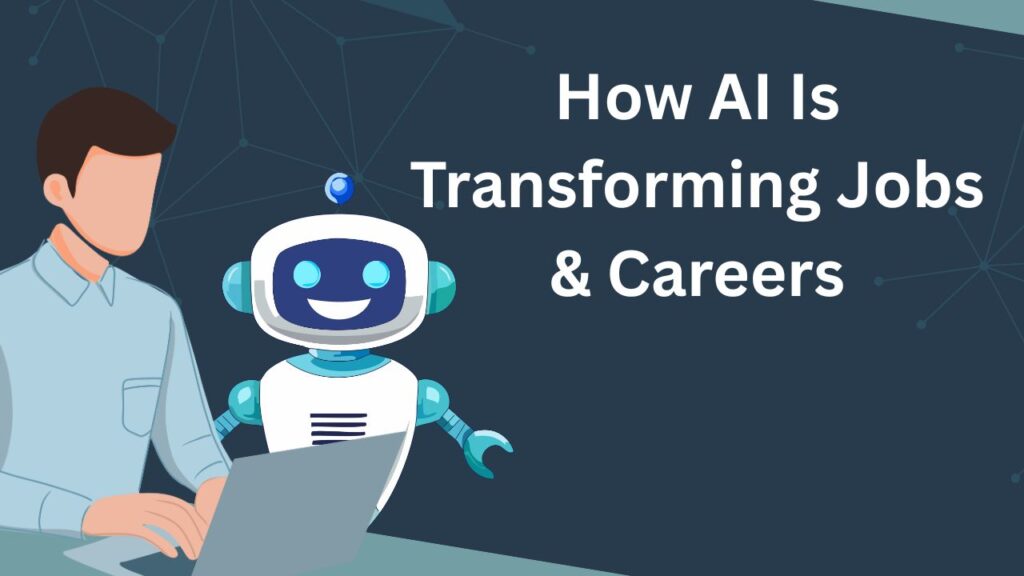
I’ve always believed technology has true value only when it improves everyday life and helps people stay connected.
Overview
Artificial Intelligence is no longer just a future idea. It is already part of our everyday working life. Today, AI helps people write emails, check data, answer customer questions, design images, and even support doctors in hospitals. From offices and schools to hospitals and online businesses, AI is changing how work is done.
However, this change is not only about machines taking over human jobs. The real shift is happening in skills, job roles, and career growth. Many jobs are changing instead of disappearing. New roles are being created, and people who learn to work with AI are finding better opportunities.
In this detailed guide, we will clearly explain how AI is transforming jobs, which skills are becoming important, what new roles are emerging, and how you can prepare your career for an AI-driven future.
Understanding How AI Is Transforming Jobs
AI is changing jobs in three main ways:
- Doing repeated work automatically
- Helping people make better decisions
- Creating new types of jobs
Instead of replacing humans completely, AI usually works as a helping tool. It saves time, reduces mistakes, and allows people to focus on more important work.
Real Example
In many offices today, AI tools prepare meeting notes, check reports, and highlight important points. The employee still decides what action to take, but AI reduces hard manual work and speeds things up. This makes work easier and more efficient.
Jobs Most Affected by AI Automation
Some jobs are changing faster than others, especially roles that involve the same work again and again.
Roles Seeing Major Automation
- Data entry jobs
- Basic customer support
- Routine accounting tasks
- Simple scheduling and reporting work
AI can complete these tasks quickly and accurately. But this does not mean people in these fields are no longer needed. Instead, their roles are shifting toward planning, communication, and people-based work.
For example, customer support agents now focus more on solving complex problems while AI handles basic questions.
New Job Roles Created by AI
As AI changes jobs, it also creates new opportunities that did not exist before.
Emerging AI-Driven Roles
- AI Prompt Specialist
- Data Analyst & AI Analyst
- AI Ethics Consultant
- Automation Manager
- AI Content Editor
Real Example
Many companies now hire AI content editors. These professionals review AI-written drafts, improve language, check facts, and make sure content sounds natural. This role combines creativity, judgment, and basic tech knowledge.
Skills That Matter Most in the AI Era
The most valuable skills today are not only technical skills. The best professionals have mixed skills — human skills supported by AI tools.
Top Skills AI Cannot Replace Easily
- Critical thinking
- Creativity and problem solving
- Clear communication
- Understanding people’s emotions
- Leadership and decision making
These skills help people guide AI instead of competing with it.
Technical Skills That Boost Career Growth
- Understanding how AI tools work
- Understanding data and reports
- Writing clear prompts for AI tools
- Basic knowledge of automated tools
You don’t need to become a programmer. Knowing how to use AI smartly is enough for most careers.
Skills Comparison: Traditional vs AI-Era Skills
| Traditional Skills | AI-Era Skills |
|---|---|
| Manual data entry | Understanding data |
| Repetitive reporting | Finding useful meaning |
| Basic writing | AI-assisted editing |
| Fixed workflows | Solving problems in new ways |
| Tool usage only | Using tools with smart thinking |
This comparison shows that AI upgrades skills instead of removing them.
How AI Is Changing Career Paths
Career paths are no longer fixed. In the past, people stayed in one role for many years. Today, careers change as technology keeps changing.
Career Shift Example
A marketing professional today may:
- Use AI tools to understand customer behavior
- Automate campaign reports
- Spend more time on creative ideas and strategy
Ten years ago, this role required many hours of manual work. AI now handles routine tasks, allowing professionals to focus on more important work.
Industry-Wise Impact of AI on Jobs
AI is affecting every industry in different ways.
Healthcare
AI helps doctors with health checks, scan analysis, and patient data review. However, human judgment remains very important. Doctors still make final decisions based on experience and care.
Education
Teachers use AI for lesson planning, student tests, and content creation. This gives them more time to focus on student guidance and engagement.
Finance
AI spots fraud, finds future patterns, and prepares reports. Finance professionals now focus more on planning and handling financial risks.
Technology & IT
AI makes coding, testing, and system setup faster. This increases demand for developers who understand AI-based tools and system design.
Will AI Replace Jobs Completely?
This is one of the biggest fears people have about AI.
The reality is balanced. AI usually replaces tasks, not full jobs. Jobs that only involve daily repeated work are at higher risk. Roles that require creativity, emotional understanding, and good judgment remain valuable.
Key Insight
In history, every major technology change created more jobs than it removed. AI is following the same pattern by opening new fields and opportunities.
How to Prepare Your Career for an AI-Driven Future
Preparing for AI does not mean becoming a tech expert. It means being willing to learn and adjust.
Practical Steps You Can Take Today
- Learn how AI tools are used in your field
- Use AI as a work-helping tool, not a shortcut
- Improve communication and thinking skills
- Stay updated with industry changes
- Keep learning new skills regularly
Real Example
Professionals who learned AI writing, design, or data tools in recent years often report better productivity and more career options.
Common Myths About AI and Jobs
| Myth | Reality |
|---|---|
| AI will replace everyone | AI changes job roles, not human workers |
| Only tech workers need AI skills | Every profession benefits |
| AI removes creativity | AI supports creative work |
| Learning AI is too hard | Most tools are easy for beginners |
Understanding these myths reduces fear and helps people adapt wisely.
The Human Advantage in an AI World
AI is powerful, but humans still do many things better:
- Right and wrong thinking
- Understanding emotions
- Creativity and storytelling
- Leadership and clear future thinking
The future belongs to people who combine AI efficiency with human intelligence.
Final Thoughts
How AI is transforming jobs is not a story of job loss. It is a story of growth and change. Careers are becoming more flexible, skills more valuable, and opportunities more open for those who are ready to learn.
AI is a strong tool, but humans remain at the center of innovation. By improving skills, staying flexible, and using technology in a smart way, you can build a career that not only survives — but grows successfully — in the AI era.
Enjoyed this article? You might also find my previous post helpful: [https://techhorizonpro.com/ai-tools-for-work-office-productivity/]
Written by Muhammad Zeeshan, a passionate tech writer dedicated to making complex technology simple and useful for everyone.
Don’t miss my related article for deeper insights into today’s digital trends.

Pingback: How Agentic AI Is Transforming Office Work: Roles, Productivity, and Real Examples | Tech Horizon Pro