
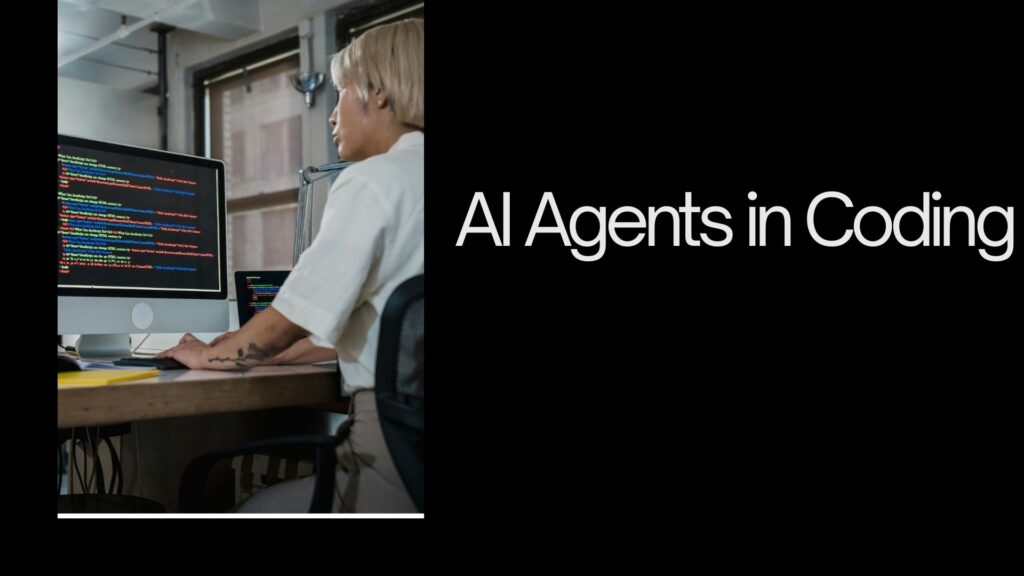
From my perspective, real technological progress isn’t about hype — it’s about usefulness and real impact on daily life.
What This Guide Covers
Software development has always been about fixing problems. At first, developers solved issues with plain code. Then frameworks made common patterns easier. Now, AI agents are joining the team as hands-on helpers — not just tools that follow commands, but tools that can plan, do tasks, check results, and get better on their own.
The rise of AI agents in software development isn’t about replacing developers. It’s about changing how code is written, tested, reviewed, and maintained. This guide explains what AI agents are, how they work in real development, where they already help, and how teams can use them safely and effectively.
What Are AI Agents in Software Development?
An AI agent is more than a chatbot or autocomplete tool. In software development, an AI agent is a self-working tool that can:
- Understand a goal (for example, “build a REST API endpoint”)
- Break it into smaller steps
- Carry out those steps using other tools
- Check the results
- Adjust if something goes wrong
Unlike regular AI tools that wait for instructions, AI agents keep working until the task is done or stopped.
How AI Agents Differ from Basic AI Tools
| Feature | Traditional AI Tool | AI Agent |
|---|---|---|
| Responds to prompts | Yes | Yes |
| Executes multiple steps | No | Yes |
| Uses external tools | Limited | Extensive |
| Self-corrects | Rarely | Often |
| Works toward a goal | No | Yes |
This is why AI agents feel very different from earlier automation tools.
Why AI Agents Are Gaining Momentum Now
Several trends have come together:
- More capable large language models
- Reliable APIs and developer tools
- Better DevOps pipelines
- Pressure to ship software faster with fewer resources
Together, these factors make autonomous coding helpers useful, not just testing tools. For many teams, AI agents are becoming part of the workflow because they reduce extra effort — not because they promise magic.
How AI Agents Are Changing the Way Code Is Built
AI agents affect the full development process, not just coding.
1. Planning and Task Breakdown
Instead of starting with a blank file, developers can ask an agent to:
- Look at what’s needed
- Suggest architecture options
- Find special situations
- Generate task lists
This doesn’t replace human judgment but speeds up early decisions.
Example: A startup building a SaaS dashboard uses an AI agent to create a feature breakdown for login, billing, and user roles before writing any code.
2. Writing and Refactoring Code
This is the most visible change. AI agents can:
- Generate basic repeated code
- Implement functions across multiple files
- Improve old code step by step
- Follow project rules
Instead of copying code snippets, developers review and refine agent output. The result: more time checking code quality and less time typing repeated code.
3. Testing and Debugging
AI agents are especially helpful with tests. They can:
- Write unit and integration tests
- Test unusual situations
- Analyze failures
- Suggest fixes with context
Use case: When a test fails in CI, an AI agent reviews logs, figures out which change caused the problem, and proposes a patch instead of just reporting the error.
4. Documentation and Knowledge Transfer
Documentation often falls behind the code. AI agents help by:
- Generating README files
- Updating API docs after changes
- Explaining complex logic in simple words
- Creating onboarding guides for new developers
This makes code easier to maintain without extra manual work.
Practical AI Agent Tools Developers Use Today
Not all AI agents are the same. Some focus on coding, others on managing tasks.
Common AI Agent Use Cases:
- Writing and improving code automatically
- Helping with code reviews
- Creating and maintaining tests
- Updating dependencies
- Automating DevOps workflows
Examples of AI Agent Tools:
| Tool Type | What It Does |
|---|---|
| Coding agents | Write, improve, and test code |
| DevOps agents | Handle pipelines and deployments |
| QA agents | Create and run tests |
| Documentation agents | Keep technical docs updated |
Many platforms combine these roles into one AI workflow.
How Teams Use AI Agents Effectively
AI agents don’t replace humans. Successful teams follow clear steps.
Step 1: Start with Clear Tasks
AI agents work best when the goal is clear.
Good tasks:
- “Create CRUD endpoints for user profiles”
- “Improve this module for better performance”
- “Add unit tests for payment processing”
Poor tasks:
- “Fix the app”
- “Make this better”
Clear instructions reduce errors and wasted effort.
Step 2: Keep Humans in the Loop
AI agents are helpers, not final checkers. Developers should:
- Review all major changes
- Validate logic and special situations
- Ensure security and rules are followed
Think of the agent as a junior developer who works fast but still needs guidance.
Step 3: Use Version Control as a Safety Net
- Feature branches
- Pull requests
- Automated tests
This ensures mistakes are caught early and all changes are tracked.
Step 4: Measure Real Impact, Not Hype
Ask questions like:
- Did this save time?
- Did it reduce bugs?
- Did it help developers focus better?
If not, the setup needs adjustment.
When AI Agents Make Sense (and When They Don’t)
Best for:
- Repetitive coding tasks
- Large codebases with clear patterns
- Well-tested environments
- Projects with tight deadlines
Not ideal for:
- Safety-critical systems
- Brand-new algorithms
- Poorly documented old code
- Projects with unclear requirements
Here, AI agents should assist, not lead.
Common Misconceptions
- “AI agents replace developers” → No, they change what developers focus on
- “They always write perfect code” → No, review is still needed
- “Using agents means less thinking” → Actually, it requires better thinking about design, limits, and choices
Understanding limits is key to using AI responsibly.
Long-Term Impact on Developer Roles
As AI agents improve, developer work will shift:
- Less repetitive coding
- More system design and review
- Stronger focus on critical thinking
- Higher value on domain knowledge
The rise of AI agents favors developers who guide, review, and improve automated work, not those who just type fast.
Security and Trust Considerations
Autonomy adds new risks. Teams must think about:
- Code origin
- Vulnerable dependencies
- Data privacy
- Access control for agent tools
Using AI agents responsibly means treating them as powerful tools with rules and control, not shortcuts.
Where This Is Headed
AI agents are still early, but trends are clear:
- Agents work together across tasks
- Feedback is faster
- Developers focus on goals, not syntax
- Software is built step by step and more thoughtfully
This doesn’t make development easier — it makes it more strategic.
A Friendly Thought
The rise of AI agents isn’t about giving control to machines. It’s about changing how humans build software — less time on repetition, more time on decisions that matter. The teams that benefit most will treat agents like smart partners: helpful, fast, and powerful — but always guided by human judgment.
If you enjoyed this article, you may also like my previous post: [https://techhorizonpro.com/ai-tools-that-think-plan-and-execute-tasks/]
Muhammad Zeeshan writes about modern technology with a focus on clarity, usefulness, and real-world impact.
For more beginner-friendly tech content, check out one of my recent articles.

Pingback: How AI Is Helping Remote Workers Save Time and Work More Efficiently | Tech Horizon Pro