
In my view, technology is more than innovation — it’s about how it connects, simplifies, and transforms our everyday lives. I believe every invention carries a story of progress and purpose, and that’s exactly what I enjoy exploring through my writing.
What The Guide Covers
More creators are starting to notice something new: their content can keep moving forward even when they take a break. Articles appear overnight, podcasts publish on time, and social media posts keep the same style — even when the creator isn’t actively working.
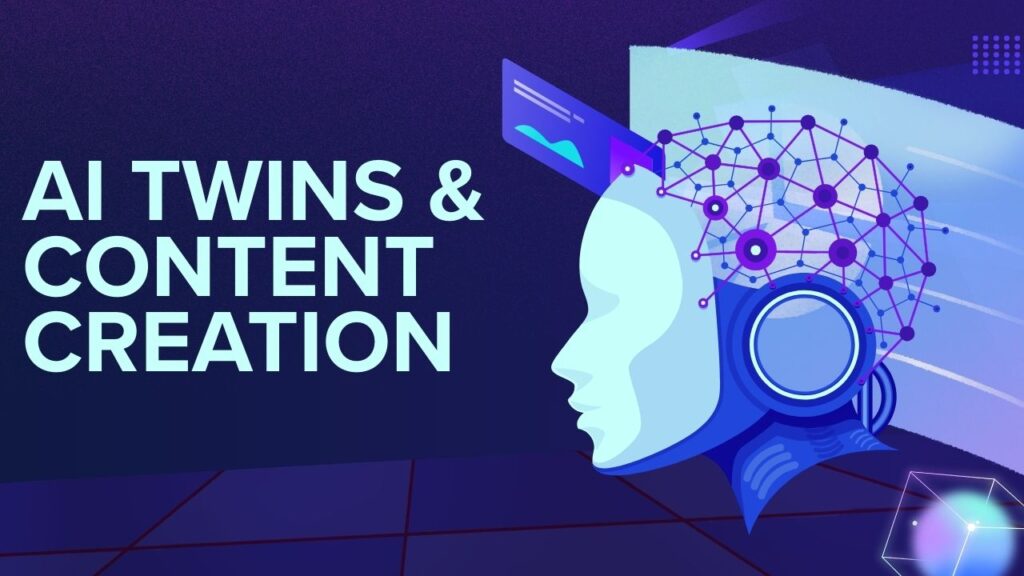
This change is happening because of a new idea called AI twins.
These are digital versions of creators that learn how they write, speak, and explain ideas. Instead of replacing people, they help creators do more work with less pressure.
The rise of AI twins is beginning to change how content is written, planned, and managed across blogs, marketing teams, and media companies. For writers, teachers, and online creators, understanding this technology is quickly becoming important.
What Are AI Twins?
An AI twin is a digital system that learns to copy the behavior, tone, and way a specific person communicates.
You can think of it as a creative assistant that learns from your work.
Instead of producing basic content, an AI twin studies patterns such as:
- Your writing tone and word choice
- The way you usually write sentences
- Topics you often discuss
- Your personal way of explaining ideas
As the system studies more examples, it starts creating content that feels closer to your natural voice.
Unlike traditional automation tools, AI twins try to show a personal style rather than simply producing random text.
Why the Rise of AI Twins Matters for Content Creators
Content creation has always required time and regular posting. Bloggers, marketers, and educators often find it difficult to keep up with publishing schedules.
The rise of AI twins helps solve several common problems.
1. Scaling Content Production
Creators often face one simple restriction: time.
An AI twin can help by:
- Drafting article outlines
- Suggesting headlines
- Expanding short ideas into full paragraphs
- Turning long content into smaller posts
This allows creators to publish more often without lowering quality.
2. Maintaining a Consistent Voice
Keeping the same brand voice across many posts can be difficult.
An AI twin helps by learning patterns such as:
- How you introduce ideas
- The tone you use when explaining complex topics
- The way you tell stories
This makes it easier for teams to keep the same style across blogs, newsletters, and social media posts.
3. Reducing Creative Burnout
Many writers experience moments when ideas stop coming.
AI twins can support creators during these times by creating:
- Topic suggestions
- Draft outlines
- New ways to explain ideas
Instead of replacing creativity, the technology works like a brainstorming partner.
Practical Ways AI Twins Are Used in Content Creation
The rise of AI twins can already be seen in several industries.
Here are real examples of how creators and companies use them.
Blogging and Long-Form Writing
Many writers use AI twins to help with early drafts.
A common process looks like this:
- The writer outlines the main idea
- The AI twin expands sections into paragraphs
- The writer edits the content and adds personal insights
This method speeds up writing while keeping human judgment in control.
Educational Content
Online teachers and course creators are also trying AI twins to support learning materials.
Possible uses include:
- Writing lesson summaries
- Creating discussion questions
- Preparing practice exercises
The instructor still controls the lessons, but the AI twin helps with getting materials ready.
Podcast and Video Script Creation
Creators who produce podcasts or videos often struggle with writing scripts.
AI twins can help by:
- Drafting episode outlines
- Suggesting talking points
- Creating organized scripts
This lets creators spend more time on storytelling and delivery.
Tools Helping Drive the Rise of AI Twins
Several modern platforms now support AI writing assistants that can slowly develop into personalized AI twins.
The goal isn’t perfect copying — it’s matching your style.
Creators usually train these tools using:
- Previous blog posts
- Email newsletters
- Social media captions
- Personal notes or documents
Over time, the system begins recognizing patterns in the creator’s writing style.
Real-World Example: A Solo Blogger Using an AI Twin
Imagine a solo technology blogger who publishes one article each week.
Before using AI tools, their writing process might look like this:
Research: 2–3 hours
Writing: 4–5 hours
Editing: 1 hour
Total time: about 7–9 hours per article
After starting an AI-assisted process:
Research stays the same
AI creates a structured draft
The writer focuses mainly on editing and adding insights
Total time may drop to 4–5 hours.
The writer still controls the final content, but the work becomes faster.
Potential Benefits and Limitations
The rise of AI twins brings exciting opportunities, but it also raises a few important questions.
Benefits
AI twins can help creators:
- Save time on repeated tasks
- Post content more regularly
- Generate new ideas faster
- Produce more content without hiring large teams
For independent creators and small businesses, this can be a big benefit.
Limitations
AI twins are helpful, but they are not perfect.
Some challenges include:
- The system may repeat similar patterns
- Deep creative thinking still needs humans
- Trust concerns about genuine content may appear
Because of this, many experts recommend using AI twins as assistants rather than replacements.
When Should Creators Consider Using AI Twins?
Not every creator needs an AI twin right away.
However, the technology becomes useful when someone is:
- Publishing content regularly
- Handling many platforms
- Working with a small team
- Managing large amounts of written content
For creators who publish only occasionally, traditional writing may still be simpler.
Comparing Traditional Content Creation vs AI Twin Assisted Workflows
The difference between traditional writing and AI-supported systems is becoming clearer.
| Factor | Traditional Workflow | AI Twin Assisted Workflow |
|---|---|---|
| Writing speed | Slower | Faster drafting |
| Consistency | Depends on the writer | More stable tone |
| Idea generation | Manual brainstorming | AI suggestions |
| Editing need | Moderate | Still necessary |
The most important point is simple: AI twins change the process, not the responsibility.
Human creators still guide accuracy, originality, and ideas.
The Future of AI Twins in Creative Work
The rise of AI twins is still in its early stage.
In the future, we may see:
- More personalized writing assistants
- AI systems trained on private knowledge libraries
- Voice-based digital twins for podcasts and videos
- Creative systems where multiple AI personalities work together
Rather than replacing creators, these tools will likely become quiet helpers in everyday work.
Just like spell checkers and design software once did, AI twins may simply become another normal part of the creative process.
A Final Thought
For many creators, the idea of a digital version of themselves once sounded like science fiction. Today it is slowly becoming part of the content creation world.
The rise of AI twins doesn’t mean human creativity is fading away. In fact, it shows how valuable human thinking, experience, and storytelling still are.
AI tools may draft faster, organize ideas, and suggest directions. But the voice, the viewpoint, and the meaning behind the content still come from real people.
And that’s something technology is unlikely to replace anytime soon.
Like this article? Don’t miss my previous post for more helpful tech insights: [https://techhorizonpro.com/agentic-ai-next-tech-revolution/]
Written by Muhammad Zeeshan — a passionate tech enthusiast exploring how innovation, AI, and digital tools are transforming the modern world. He writes with curiosity and clarity, making complex technology simple and practical for everyone.

Pingback: The Future of Wearable Technology: Trends, Innovations, and What Comes Next | Tech Horizon Pro